Wellness rooms are redefining the home: here’s how to build yours better
From meditation corners to multifunctional sanctuaries, wellness rooms are becoming the new heart of the home. Learn how to create one that supports your nervous system, space and daily rhythm.

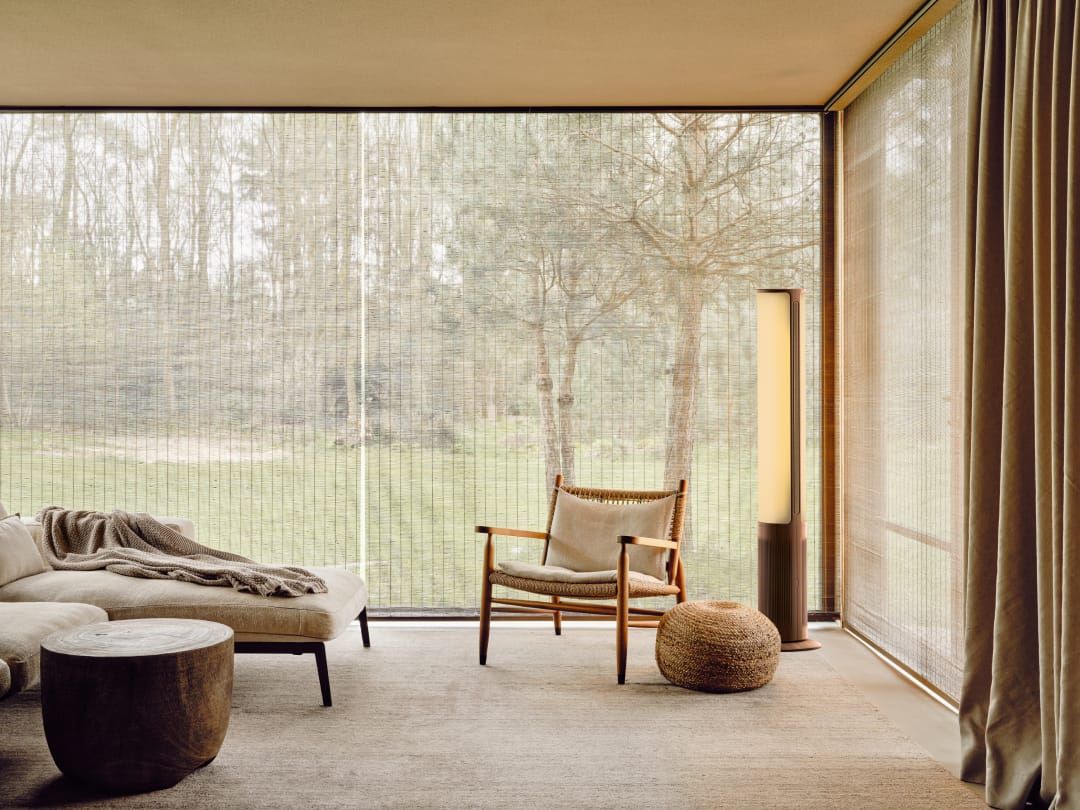
The 2020 pandemic blurred the lines between rest, work and retreat. Kitchens became offices, bedrooms doubled as yoga studios, and quiet corners hosted therapy calls. Now, instead of hiding self-care practices, many of us are carving out space to prioritise them.
Enter the wellness room.
Bill Bryson put it well in his book Home, reminding us that dwellings have always adapted to the needs of the moment. From parlours to drawing rooms to conservatories, every era reinvents what comfort looks like. Today, it's the wellness room’s turn.
Whether it’s a full renovation or a simple reframe of a spare room, these spaces are no longer seen as luxuries. True wellness is not a one-off event, it’s built through small, consistent daily practices woven into our environment.
They’re becoming essential. A place to decompress, restore and recalibrate. Not just for you, but for everyone in the home.
The shift is happening beyond private homes, too. Hotels and high-end retreats are now building wellness trends directly into their floor plans, from infrared saunas and meditation pods to circadian lighting and scent-controlled zones. What was once a spa upgrade is becoming a standard feature. Wellness is no longer an afterthought, it's an expectation.
What makes a wellness room actually work?
The value of a wellness room lies less in square footage and more in how it functions.
Whether we’re building a sanctuary for silence or a zone to lift heavy and blast music, the most supportive spaces serve multiple layers of the nervous system. They invite both stillness and stimulation, solitude and creativity.
The most supportive ones aren’t rigid. They’re flexible, modular, and adjustable. These spaces evolve with us.
Think of it less as a spa setup and more as a well-being support station. The space should support you whether you’re stretching, sweating, sounding, staring, reflecting or sleeping.
Beyond single-use: designing for daily life
Here’s where most wellness rooms fall short. They rely on multiple single-use tools: one for red light, another for sound, another for purification and one more for scent. Most of these pieces clash with the design of the room and rarely integrate into daily rhythms.
Multifunctional design means fewer purchases, less clutter and a room that feels coherent instead of crowded. Multi-purpose tools that combine atmosphere, function and form will always win out.
Integrate a design that calms the senses
The nervous system picks up on every detail, even the ones we think we’ve tuned out. That’s why most wellness rooms prioritise earthy tones, curved edges, natural wood, cork, soft textiles and sound-dampening surfaces. Harsh light, cluttered corners and over-designed equipment all create friction.
Lighting should be adjustable, not just overhead. Scents should be subtle and clean. Seating should invite rest without posture collapse. Sound should travel gently or be absorbed when needed.
If the room doesn’t feel safe to the senses, the body won’t downshift or begin the restoration process.
Sound, light and air sit at the core of every effective wellness space
They shape the body’s interpretation of space. A sudden sound, harsh light or change in air quality can send a signal to either tense or release. The more intentional these inputs are, the more consistently the body can settle.
Air quality affects focus, energy and sleep. Light modulates hormone production and circadian alignment. Sound regulates brainwave activity and tension release.
Why clutter the space with three separate tools when one will do? Choose multi-functional pieces that address all three while blending seamlessly into your space.
Meet the new essential
There’s growing awareness that health is not just about what we eat or how we move. It’s also about the spaces we move through. The right environment doesn’t just feel better, it shifts biology.
From brainwaves to breath rate, surroundings shape physiology moment by moment. This is what makes a well-designed wellness room powerful. It gives us a baseline, a steady signal to come back to. Consistency is the real differentiator. Visiting a spa once in a while feels good, but it does not create lasting change.
True wellness is built through small, daily patterns, woven into the places we live. That kind of consistency, even just a few minutes a day, adds up in ways that change how we function.
Wellness rooms aren’t about buying more things. They’re about choosing what supports us clearly, consistently and beautifully.
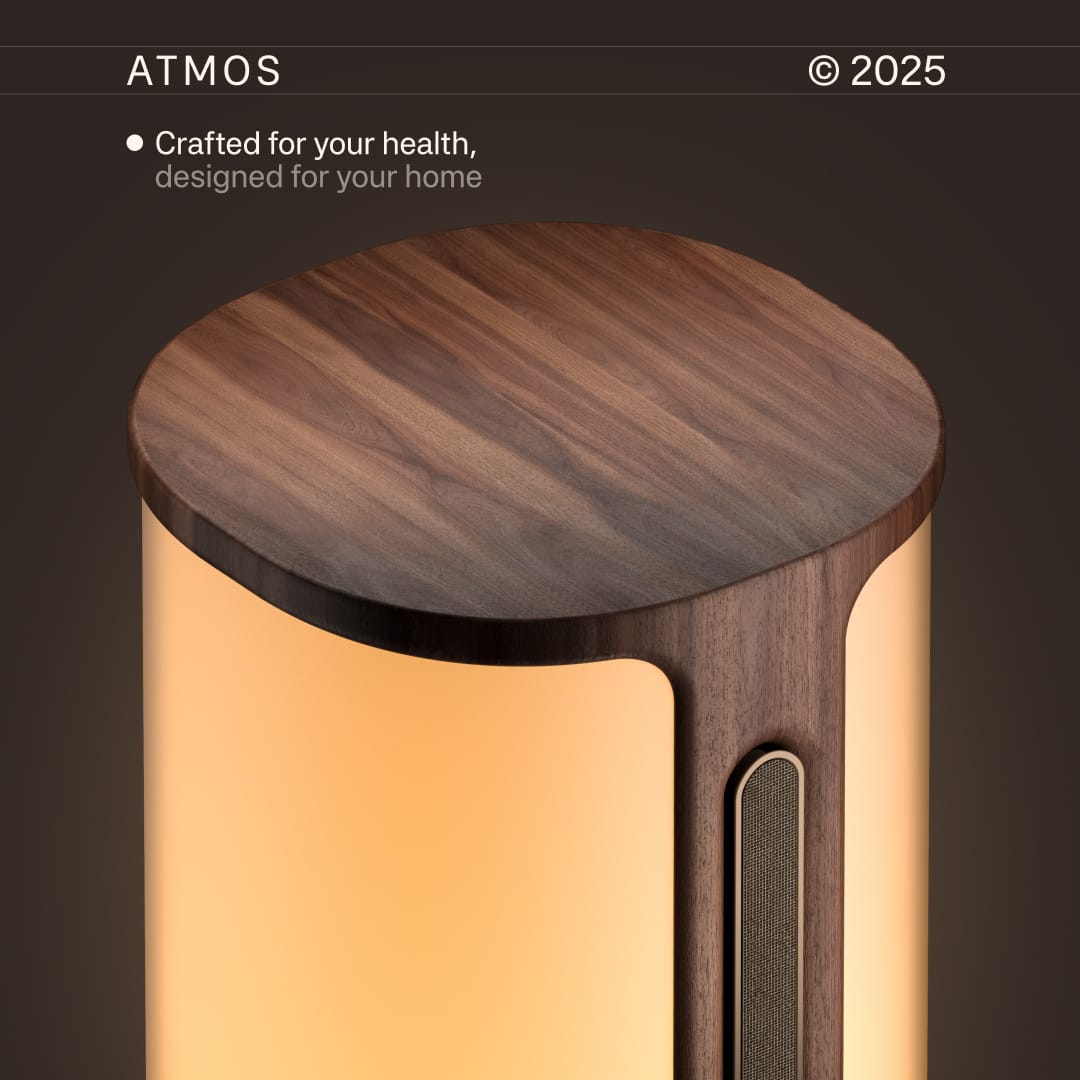
That’s where ATMOS enters, combining high-output red and full-spectrum light with powerful HEPA air purification and subtle ambient presence.
It supports energy, recovery, and sleep consistently, day after day, in an all-in-one sculptural unit that fits seamlessly into any wellness space.
No clutter, no design compromise.
No need to choose between beauty and function.
Start with a room or just one corner
You don’t need a renovation to feel the difference. A wellness room can start with just one zone, one corner, one simple cue that tells your body it’s time to reset.
A corner by the window, a lamp beside the bed, even the hallway where you stretch each morning. It might be a chair, a mat or a light. Just one element that softens the noise and invites stillness.
The important part isn’t scale. Its intention.
And once we feel what the right environment does for the system, it becomes less of a luxury and more of a daily ritual.